Unlocking Emotions: How Disney Pixar’s Inside Out Inspired a DIY Interactive Plush Holder for My Kids
This post is sponsored by Collective Bias, Inc. and its advertiser. All opinions are mine alone. #InsideOutEmotions #CollectiveBias
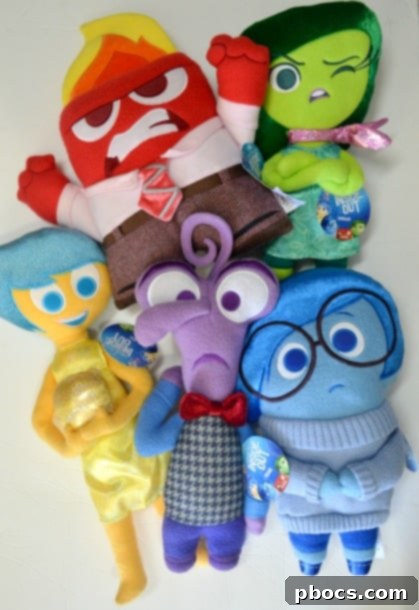
Last weekend, I finally carved out some much-needed time to experience the cinematic marvel that is Disney Pixar’s Inside Out. As a long-time admirer of Disney movies, I’ve amassed countless favorites over the years, but “Inside Out” didn’t just meet my expectations – it soared past them, setting a new benchmark for animated storytelling and emotional depth. It’s truly a must-watch for families and anyone interested in the complex world of human feelings.
For those who haven’t yet had the pleasure, Inside Out masterfully tells the story of an 11-year-old girl named Riley whose life is upended by a move to a new city. What makes this film utterly brilliant is its innovative approach to character development: the main protagonists aren’t people, but Riley’s core emotions—Joy, Sadness, Anger, Fear, and Disgust—personified within her mind. This groundbreaking concept provides a unique lens through which to view and understand our own internal landscapes.
Navigating a House Full of Emotions: My Parenting Journey
In my own bustling household, featuring three teenage boys, a spirited 10-year-old tween, and our lively toddler, Joseph, I’ve witnessed a full spectrum of emotions playing out, often simultaneously and with impressive intensity. From moments of sheer joy to outbursts of anger, profound sadness, and even comical disgust, our home is a constant, vibrant stage for emotional expression. There have been countless times when a disagreement or a spilled juice has led to a cascade of reactions, sometimes leaving me feeling overwhelmed.
Early on, I might have taken these emotional surges personally, responding with my own frustration or sadness. However, over time, I’ve learned the invaluable lesson of stepping back. Parenting has taught me that my role isn’t just to manage behavior, but to model healthy emotional regulation. My children look to me to understand how to channel their anger constructively, confront their fears with courage, and navigate sadness with resilience. It’s a continuous learning process for all of us.
As my youngest, Joseph, grows into an active toddler, his emerging personality and boundless emotions are a daily spectacle. Despite his deliberate attempts to test boundaries – as toddlers so often do – I find myself approaching these moments with increasing calm. This isn’t just for my own peace of mind; I’m acutely aware that my older boys are observing how I interact with their little brother, internalizing these lessons about patience, empathy, and emotional control. This challenging journey of guiding five unique personalities through their emotional development is profoundly rewarding on countless levels.
Inside Out: A Catalyst for Emotional Conversations
Watching Inside Out together wasn’t just an entertaining family activity; it ignited a fresh wave of conversations about feelings and their profound role in our daily lives. The movie provided a universal language for discussing complex emotions, making them tangible and less intimidating. But, surprisingly, it wasn’t solely the movie itself that sparked these crucial discussions. A significant catalyst arrived in the form of the delightful Inside Out plush toys we picked up at Walmart immediately after leaving the cinema. These adorable representations of Joy, Sadness, Anger, Fear, and Disgust became instant conduits for our family’s emotional dialogues.
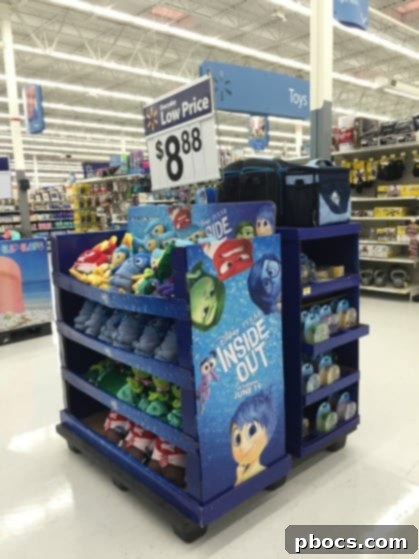
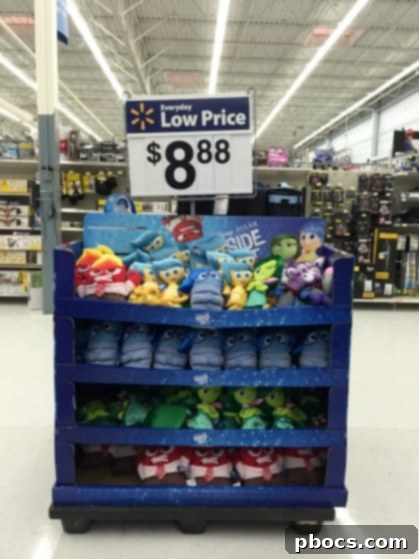
As soon as these charming plush characters entered our home, they were instantly integrated into our family dynamics. My fourth youngest son, Robert, often has a tendency to internalize his feelings, bottling them up rather than articulating them. That very night, after a squabble with his older brothers over computer time, I witnessed a breakthrough. Instead of retreating into his usual silence, Robert stormed into the living room and, almost instinctively, grabbed the Anger plush. This simple act of physical representation spoke volumes. It was a clear, non-verbal expression of his frustration, and it sparked an idea in me.
Rather than having these valuable tools for emotional expression scattered around the house, I envisioned creating a dedicated “home” for them. This wasn’t just about organization; it was about crafting an interactive space where Robert, and indeed all my boys, could more readily engage with their feelings. My hope was that this tangible emotional outlet would empower Robert to communicate his internal world with me more openly and effectively, fostering a deeper understanding between us.
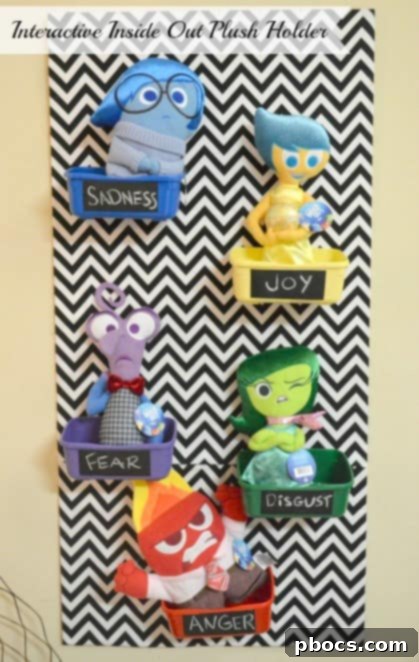
DIY Emotional Outlet: Crafting an Interactive Inside Out Plush Holder
Inspired by the profound impact of the Inside Out movie and the immediate resonance of the plush toys, I decided to embark on a DIY project to create a unique, interactive plush holder. This project was designed not only to organize the toys but, more importantly, to serve as a visual and tactile tool for my children to identify and express their feelings. Below, you’ll find the detailed steps to replicate this engaging and functional emotional support system, along with insights into how it’s transformed our family’s communication.
Materials You’ll Need:
- Five empty baby wipe bins (ensure they are clean and dry)
- Five cans of high-gloss spray paint (matching the Inside Out emotions: yellow for Joy, blue for Sadness, red for Anger, purple for Fear, green for Disgust)
- One 2×4 piece of wood paneling (length should accommodate the five bins side-by-side)
- 3 yards of decorative fabric (I chose a chevron pattern for visual appeal)
- Staple Gun
- Staples
- Scissors
- One large sheet of chalk board sticker paper
- Chalk or chalk markers
- 4×6 or 7×8 screws and corresponding ribbed plastic anchors (for wall mounting)
- Drill (optional, for pre-drilling holes)
Step-by-Step Instructions:
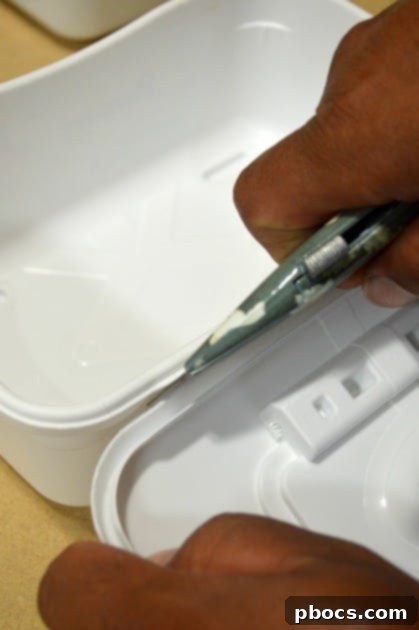
Prepare the Bins: Carefully cut off the lids from the five empty baby wipe bins. This creates an open, cylindrical container for each plush toy. Ensure the edges are smooth and safe.

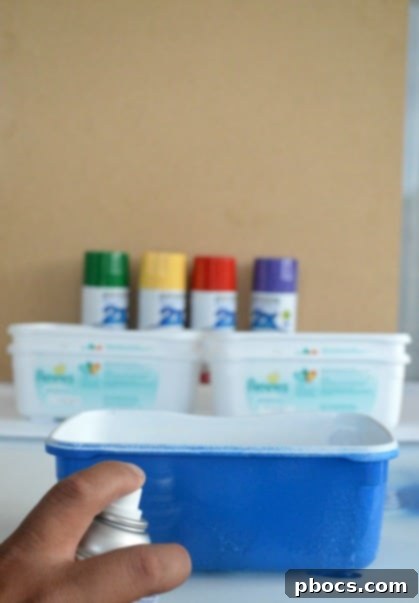
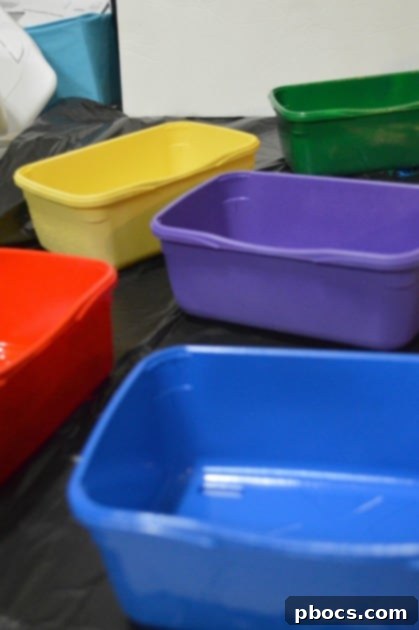
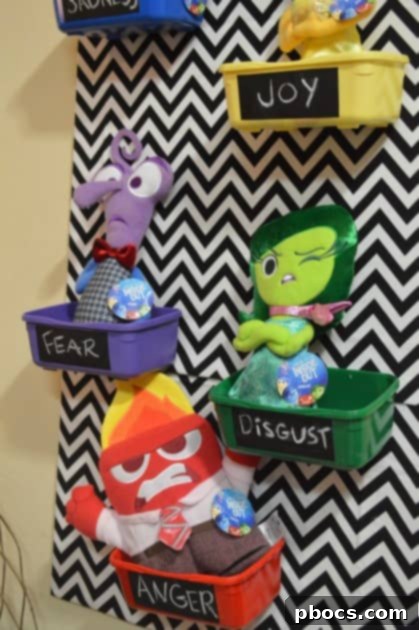
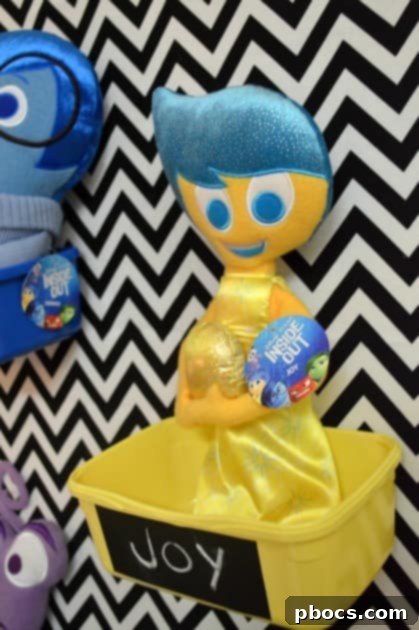
Spray Paint the Bins: Take your prepared bins outdoors or into a well-ventilated area. Apply an even coat of high-gloss spray paint to each bin, assigning a color to each Inside Out emotion: yellow for Joy, blue for Sadness, red for Anger, purple for Fear, and green for Disgust. You may need multiple thin coats for full coverage and a vibrant finish. Allow each coat to dry thoroughly between applications.
Allow Bins to Dry Completely: This is a crucial step for durability and to prevent stickiness. Let the painted bins dry overnight, or even longer, until they are completely cured and no longer tacky to the touch. This ensures the paint is robust and ready for daily use.
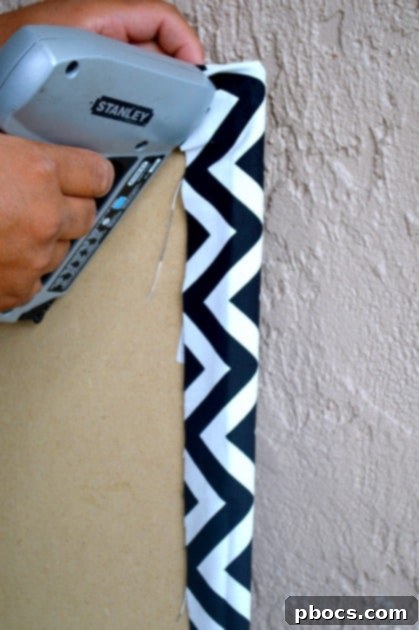
Cover the Wood Panel with Fabric: Lay your chosen decorative fabric face down on a clean, flat surface. Center the 2×4 wood panel on top of the fabric. Wrap the fabric around the edges of the wood, pulling it taut, and secure it firmly to the back of the panel using your staple gun. Ensure the fabric is smooth and wrinkle-free on the front. Trim any excess fabric for a neat finish.
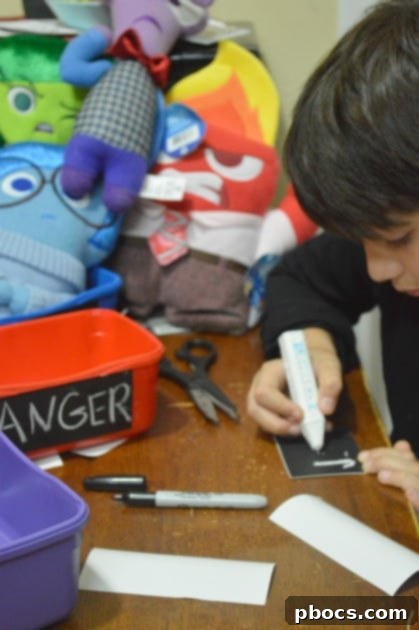
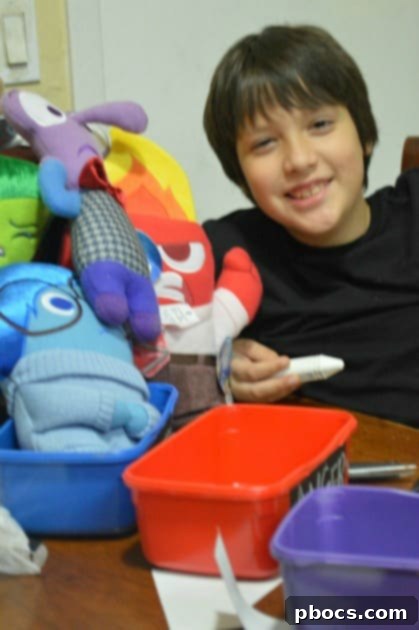
Create Chalkboard Labels: Measure the front side of each wipe bin. Cut five pieces from your chalkboard sticker sheet, slightly smaller than the bin’s front surface to create a framed look. Peel off the backing and carefully apply one sticker to the front of each colored bin. Using chalk or chalk markers, clearly write the name of the corresponding emotion on each sticker: “Joy,” “Sadness,” “Anger,” “Fear,” and “Disgust.” This makes it easy for children to identify and connect with the emotions.
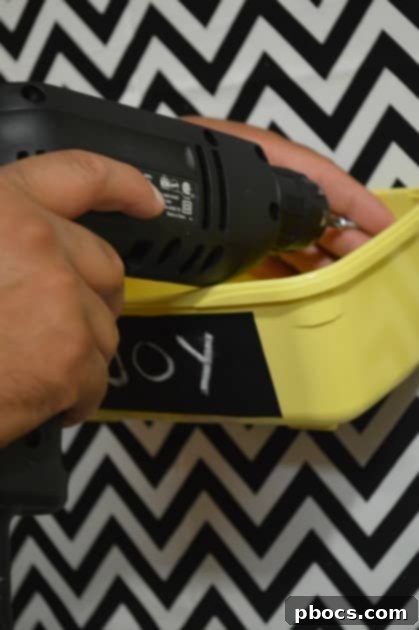
Attach Bins to the Wood Panel: Arrange the five labeled bins onto the fabric-covered wood panel, ensuring even spacing. Secure each bin to the wood using screws or heavy-duty staples. For a more robust hold, screws are recommended, especially if the bins will be frequently accessed. Pre-drilling small pilot holes can prevent the wood from splitting. Once all bins are securely attached, the entire unit is ready to be mounted.
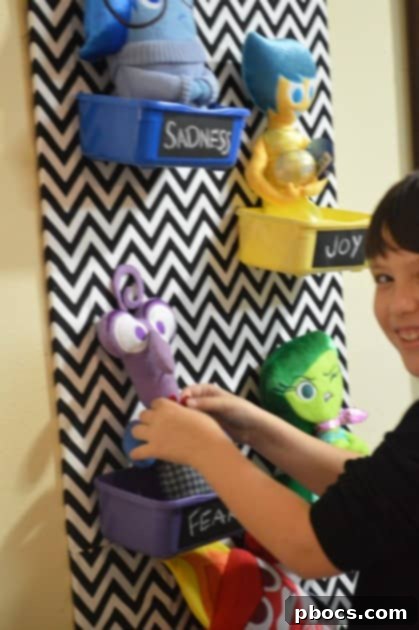
Mount the Holder to the Wall: Choose a prominent, easily accessible spot in your child’s room or a family common area. Using your screws and ribbed plastic anchors (essential for securing into drywall), carefully screw the wood panel to the wall. Ensure it’s level and firmly attached, capable of holding the weight of the bins and plush toys. Safety is paramount here; make sure it’s installed securely to prevent it from falling.
Place Plush Toys in Bins: Finally, gently place each Inside Out plush toy into its corresponding color-coded and labeled bin. Your interactive emotional plush holder is now complete and ready for use!
The Heartwarming Impact: Fostering Emotional Intelligence
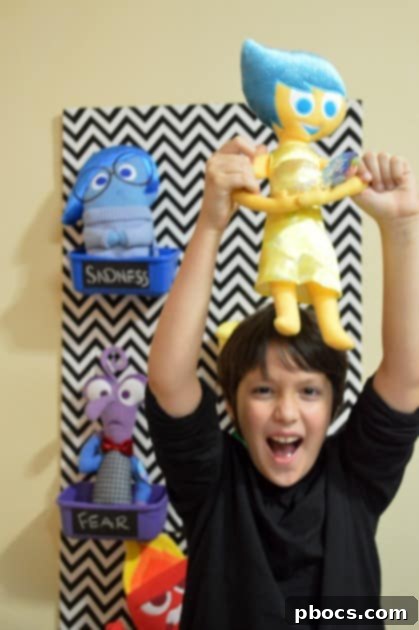
The creation of this interactive plush holder has been nothing short of transformative for our family, especially for Robert. It has become a tangible, visual aid that bridges the gap between internal feelings and external expression. Now, when I sense something is amiss with Robert and his usual verbal responses are elusive, I don’t pressure him. Instead, I gently ask if he’d like to show me how he’s feeling using the plush toys. The immediate joy and relief in his eyes as he jumps up to select the appropriate emotion — be it Anger, Sadness, or even Disgust — is incredibly heartwarming.
This simple DIY project has opened up a crucial channel for communication. It empowers my children, particularly those who struggle to articulate complex emotions, to identify and acknowledge what they’re experiencing. By giving them a physical representation of their feelings, we’re helping them develop essential emotional literacy and self-awareness. This isn’t just about sharing an emotion; it’s about validating their feelings and teaching them healthy coping mechanisms from a young age. Watching Robert confidently point to a plush to convey his mood fills my heart with an overwhelming sense of joy and gratitude for this small yet impactful tool.
Beyond the Screen: Continuing the Inside Out Journey
If you haven’t yet embarked on the journey into Riley’s mind with Inside Out, I wholeheartedly urge you to do so. Just be prepared; you might want to bring along some tissues, as it’s a deeply moving experience that often brings tears to many – perhaps that was just me! The film masterfully illustrates the beauty and necessity of all our emotions, including sadness, and its message resonates long after the credits roll.
To further enhance your family’s emotional exploration and keep the spirit of the movie alive, consider making a trip to Walmart. Besides the wonderful plush toys that inspired our DIY project, you might also find other fun, themed products, like the delicious Kellogg’s Inside Out Fruit Snacks. These small additions can serve as gentle reminders to continue those vital conversations about feelings, fostering a home environment where every emotion is recognized, understood, and openly discussed.
This movie, coupled with a simple DIY project, has profoundly enriched our family’s ability to connect on an emotional level. It’s a testament to the power of creative storytelling and hands-on learning in building stronger, more emotionally intelligent family bonds. Embrace your emotions, talk about them, and perhaps, create your own “Inside Out” emotional hub!