Embracing the Beautiful Chaos: Navigating Life in a Multi-Functional Family Living Room
The weekend often holds the promise of productivity and order, a vision of carefully planned tasks unfolding seamlessly. For many parents, however, reality has a delightful, albeit chaotic, way of intervening. My recent weekend was a perfect example. It began with the joyful mission of spending Joseph’s birthday gift cards, culminating in a triumphant haul of exciting new toys for my youngest. The second half of my weekend was dedicated to what I optimistically envisioned as a grand organizational overhaul of our living room – a space that serves not only as our family’s central gathering area but also doubles as a vibrant playroom and my dedicated home office. You might wonder why I’d attempt such an ambitious feat within a single weekend. My rationale, flawed as it turned out to be, was simple: I genuinely believed I had it all mapped out. My intricate plan involved seamlessly integrating Joseph’s new treasures with our existing belongings, all while maintaining a pristine, inspiring environment for my work. Oh, how quickly that illusion shattered! The reality was a stark contrast to my well-intentioned blueprint; very little unfolded as I had hoped.
The Grand Vision vs. Weekend Reality: A Playroom Predicament
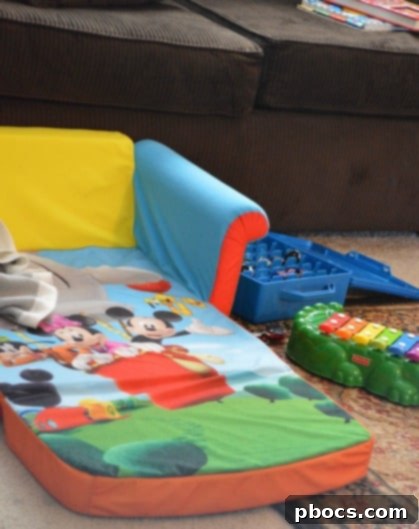
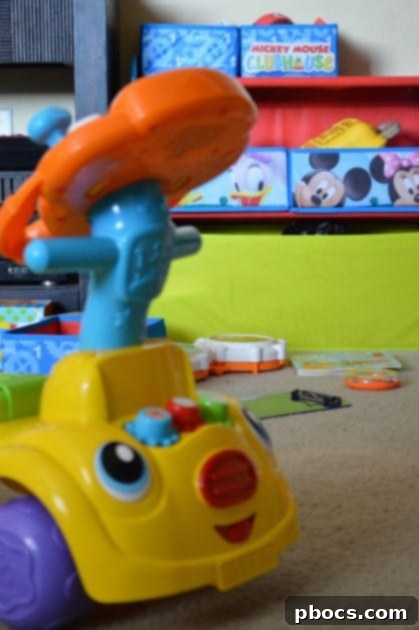
My initial optimism stemmed from a deep desire to create a harmonious environment. I pictured elegant storage solutions, neatly tucked-away toys, and a clearly defined, tranquil workspace. I imagined the new birthday gifts finding their rightful places, perhaps in stylish bins or on newly designated shelves, enhancing the room’s functionality rather than overwhelming it. The reality, however, was an immediate and humbling lesson in the sheer volume that a toddler’s new toy collection can command. As each brightly colored box was opened and every new gadget unwrapped, the available floor space seemed to shrink before my eyes. What started as an organized unboxing quickly devolved into a colorful explosion of plastic, plush, and electronic wonders, each demanding its own piece of real estate. My meticulously envisioned work-zone, once a beacon of productivity, swiftly transformed into an accessory to the burgeoning play area, with toy cars threatening to race across my keyboard and building blocks creating precarious towers beside my monitor. The dream of a perfectly organized, multi-purpose room was swiftly replaced by the beautiful, undeniable truth of family life: sometimes, chaos is simply part of the package.
More Than Just a Living Room: The Evolving Dynamics of Our Home
A Growing Family, A Shrinking Space
For years, I meticulously maintained a clear separation between my older children’s toys and our main living areas. Dedicated playrooms or bedrooms housed their collections, allowing the living room to remain a more adult-centric space. However, as our family has grown and evolved, particularly with the arrival of Joseph, those clear boundaries have naturally blurred. To truly provide everyone—including myself—with the individual space we ideally need, I’d honestly have to consider acquiring something akin to a small compound! Joking aside, the reality of modern living often means making the most of the space we have. Our home, like many, isn’t endlessly expandable. This practical constraint, coupled with Joseph’s age and developmental needs, necessitates a more integrated approach to our living arrangements. The living room, by default, has become the primary hub for all activities, a vibrant testament to our family’s active life. This shift isn’t just about fitting in new possessions; it’s about adapting our home to reflect the current stage of our family’s journey, making every square foot work harder and smarter to accommodate our collective needs and joys.
The World of a Work-From-Home Parent
Another significant factor in this spatial re-evaluation is my transition to working from home—a dynamic I never experienced when my older children were young. With Joseph now in the house, it’s just him and me for most of the day. This means I have to be constantly available, deeply “in the mix,” which inevitably translates to working precisely where he plays. While this setup certainly presents its unique set of challenges, it’s a trade-off I genuinely cherish. The constant presence in Joseph’s world allows me to witness his daily discoveries, his infectious giggles, and his spontaneous hugs—moments I would otherwise miss. However, the realities of working alongside a curious toddler are undeniable. At his current age, everything is a potential toy, a fascinating object to grab, poke, and investigate. This makes maintaining focus, especially during important tasks or virtual meetings, a delicate balancing act. There are countless instances of tiny hands reaching for the keyboard, vital documents becoming impromptu canvases, or a sudden, urgent request for attention during a complex thought process. Yet, despite these daily delightful disruptions, I wouldn’t trade these precious, fleeting years for anything. The opportunity to be his primary caregiver and observer during this formative stage is an immense blessing, a perspective that helps temper any frustrations over a less-than-perfectly-organized workspace.
The Unforeseen Benefits of Shared Spaces
Beyond Just Toys: A Hub for Family Life
What might appear as mere clutter to an outsider—Joseph’s colorful array of toys sprawled across the living room floor—is, in fact, a vibrant indicator of a lively, engaging home. These aren’t just objects; they are catalysts for imaginative play, tools for developmental learning, and symbols of the sheer joy a toddler brings into a household. Furthermore, this multi-functional living room isn’t just a domain for Joseph. My older son, Robert, frequently utilizes my “work space” for his homework, quietly sharing the table or a corner of the room, adding another layer to our shared family hub. Far from being an inconvenience, this shared usage transforms the living room from a singular-purpose area into a dynamic nucleus of our home. It’s where we connect, where learning happens, where play unfolds, and where work intertwines with life. This constant interaction, while occasionally messy, fosters a unique sense of togetherness and allows us to be present in each other’s lives in a way that rigidly separate spaces might prevent. It’s a testament to the adaptability of family life, proving that a home’s true warmth isn’t found in perfect order, but in shared experiences.
Redefining Productivity and Perfection
The journey from striving for an immaculately organized living room to embracing its current state of “beautiful chaos” has been a profound lesson in redefining what productivity and perfection truly mean within the context of family life. My initial frustration with the organizational challenges gradually gave way to a deeper appreciation for the present moment. This fleeting stage of Joseph’s life, characterized by his boundless energy and curiosity, will pass all too quickly. To constantly battle against the natural inclination for toys to spread and play to dominate would be to miss the essence of what makes this time so special. I’ve learned that success isn’t about maintaining pristine surfaces or achieving picture-perfect decor; it’s about fostering a happy, supportive, and functional environment where everyone feels comfortable and engaged. The true blessing lies in the privilege of watching Joseph grow, seeing his world unfold daily, and cherishing these moments of innocent exploration, even if they come with a side of delightful disorder. This perspective allows me to let go of unrealistic expectations and instead focus on the rich experiences and connections that define our family life.
Practical Tips (and Realities) for a Multi-Purpose Family Space
Strategic Storage Solutions (When They Work)
While my current reality leans more towards embracing visible clutter, the theory of strategic storage solutions remains a beacon of hope for many multi-purpose family spaces. Ideas such as opting for furniture with integrated storage – ottomans that open, coffee tables with hidden compartments, or benches with pull-out bins – are brilliant in principle. Implementing systems like toy rotation, where only a selection of toys is available at one time, can significantly reduce visible clutter and keep play fresh. Similarly, investing in attractive, easily accessible bins or baskets that blend with the decor can help contain the daily explosion of playthings. For the work-from-home parent, designating a specific, albeit small, area for office essentials that can be quickly packed away at the end of the workday is a useful strategy. However, the reality, especially with a busy toddler, is that these systems often face formidable opposition. The goal becomes less about perfect execution and more about damage control and finding pockets of momentary order amidst the constant flow of family activity.
Establishing Flexible Zones (Mostly in Theory)
In an ideal multi-purpose room, one would establish clearly defined “zones”: a quiet corner for reading, a vibrant area for play, and a focused nook for work. While this concept offers a sense of order and purpose, its application in a real, lived-in family home, particularly with young children, often remains largely theoretical. What begins as a designated work desk might swiftly transform into a crafting station for an older child or a temporary parking lot for toy trucks. The ‘play zone’ inherently expands to fill any available space, particularly when imaginative games are underway. The key is to embrace this fluidity and build adaptability into the design of the space. Instead of rigid boundaries, think about furniture that can be easily moved or reconfigured, allowing the room to transform organically throughout the day. A sturdy coffee table can serve as a work surface, a play station, or a dining area, depending on the family’s immediate needs. This flexibility ensures the room truly serves its multi-faceted purpose, even if the lines between zones are perpetually blurred.
Embracing the Impermanence
Perhaps the most profound realization when living in a multi-purpose, family-centric space is the importance of embracing impermanence. The state of our living room—its current blend of toys, homework, and work essentials—is not a permanent fixture but a transient reflection of this unique chapter in our family’s story. Children grow, their needs change, and the dynamics of a household are in constant flux. Attempting to force an unchanging order onto an ever-evolving family environment can lead to unnecessary stress and frustration. Instead, finding peace in the ebb and flow, in the daily dance between order and delightful disarray, allows for a much richer and more authentic experience. It’s about being present and appreciating the now, understanding that these are the moments that truly define our family life. The toys will eventually be outgrown, the homework challenges will evolve, and the demands of working from home will adapt. What remains is the tapestry of shared memories, forged in a living room that, despite its delightful chaos, always feels like home.